The rest of you
Rest like your life depends on it... because sometimes it does.


Hi there,
Rest wasn’t really a thing in our house.
I was born and raised in London to Nigerian parents who loved me, believed in me, and made damn sure I understood the value of hard work. But rest? That was something you did only when you were done. Finished. Exhausted. Even ill.
There was no such thing as “taking a break” when I was growing up. If I wasn’t ‘reading my books’, I was doing chores or helping out in some way. Sitting still for no good reason was a luxury I wasn’t taught to recognise. If I said I was tired, I’d get a raised eyebrow and a reminder that I hadn’t even started my life yet.
So, it’s not surprising that my first real memory of rest was… enforced.
I must’ve been about eleven or twelve. I’d dressed up in my Tammy Girl outfit and gleaming Dolcis jelly heels. I was fully feeling myself, strutting down the road like I was heading to the Met Gala (or more likely, Woolworths). So caught up in myself, I didn’t clock the broken paving slab ahead, and I stacked it. Badly. One twisted ankle, a pair of crutches, and a heavy dose of ibuprofen later, I spent the next 36 hours drifting in and out of sleep. It was summer. Rudyard Kipling’s Jungle Book was playing softly on the radio. The whole memory glows in my head like a wonky Instagram filter.
Isn’t it wild that that’s my first real memory of rest?
I wasn’t recharging. I was recovering.
I didn’t choose rest. My body forced it on me.
And that pattern stayed with me.
Even in adulthood, with a flat of my own and the freedom to do what I liked, I found myself cleaning on Friday nights so I could earn a lie-in on Saturday. I couldn’t rest unless I’d proven myself first. And when I did indulge in rest, you know, the surface-level kind we’re sold these days, with bath salts and glossy serums, it often left me feeling more guilty than restored. Worse, it rarely worked because I still felt so tired.
For a long time, I thought the problem was me, but what I’ve come to realise (slowly, reluctantly and through some serious unlearning) is that most of us are exhausted not because we’re doing too much, but because we’ve misunderstood what rest actually is.
We don’t need more bubble baths.
We need more truth about what it means to truly rest.
The seven kinds of tired
Last year, I came across the work of Dr Saundra Dalton-Smith, a physician and researcher who wrote a book called Sacred Rest. In it, she shares something I wish I’d known years ago: most of us aren’t simply tired. We’re tired in specific ways and we’ve been treating the symptoms without understanding the cause.
She argues that there are seven kinds of rest we actually need. Not one. Seven. When I first read them, something clicked into place. It explained why a nap didn’t cure my brain fog and why my precious time alone didn’t always soothe the ache. If you’re emotionally worn thin, a Saturday lie-in won’t fix it. If you’re creatively starved, a bath bomb and a podcast aren’t going to light the spark again. We keep throwing the same tired (pun very much intended) solutions at completely different problems and then blame ourselves when nothing changes.
That’s why I think this framework matters. It gives us language, and once we have the right language, we have the ability to make better choices.
Here’s how Dr Dalton-Smith breaks it down:
Physical rest is the one we all know. It’s sleep, stillness, a break for your body. But it’s also gentle movement, stretching and breath work. Think things that release tension, not just pause it.
Mental rest is about giving your brain a breather. When you’re overloaded, distracted, or forgetful, your mind is begging for space. Mental rest looks like single-tasking, screen breaks, even silence.
Emotional rest is the relief of being real. It’s what we need when we’re constantly managing other people’s feelings or suppressing our own. This rest comes from expressing what’s true and being met with care, not judgment.
Sensory rest is something we rarely think about, but desperately need. It’s what restores us when the world feels loud, bright, and too much. That might mean turning off notifications, dimming the lights, or just stepping away from the scroll.
Creative rest refuels the part of you that dreams and imagines. When everything feels flat or uninspired, creative rest can be found in beauty, art, nature, music, or in doing something that doesn’t need to achieve anything.
Social rest isn’t just being alone. It’s being around people who let you exhale. The ones you don’t have to perform for. The ones where presence, not polish, is more than enough.
Spiritual rest speaks to the soul. It’s about feeling connected to something larger than yourself. That might be prayer, meditation, ritual, community, or simply time spent in stillness and meaning.
Once I had this language, I could finally stop guessing and instead start asking better questions. Namely, “What kind of tired am I?” and “What kind of rest do I need?”.
And that small shift, that moment of clarity, changed everything.
Learning to listen again
This isn’t about becoming someone who always rests well or manages their energy perfectly. Life doesn’t usually offer that kind of control and let’s be honest, many of us wouldn’t take it even if it did. But what we can do is begin to notice when the signs start showing up. The dull ache of resentment when someone asks one more thing of us. The steady drop in concentration. The low hum of anxiety we try to dismiss. The way joy starts to feel distant or even inaccessible. These things aren’t proof that we’re weak or failing, they are just quiet indicators that something important needs tending to.
Sadly, many of us were taught to override these signals by seeing tiredness as a personal failing or a problem to push through. But the longer we ignore it, the louder it gets until the body, the mind or the spirit forces us to stop. So, what would it look like to notice a little earlier? To give ourselves permission to pause before we crash? That’s the shift I had and all it took was presence and practice.
WorkWell Wisdom
“If you get tired, learn to rest, not to quit.” - Banksy
This week, take a moment to check in with yourself. Not in a performative, tick-box way but with real honesty. You might try asking:
What kind of tired am I right now?
What would feel nourishing, not just soothing?
If I didn’t feel like I had to earn it, what kind of rest would I give myself today?
These aren’t trick questions, and they don’t have to lead to dramatic answers. You don’t have to book a retreat or cancel all your meetings. But you might sit down without a screen for five minutes. You might go for a walk instead of powering through. You might decide that rest is not the reward, but the resource, and something you deserve access to, even when the to-do list isn’t done.
When you learn to rest, you learn to return to yourself. And that is never time wasted.
WorkWell Recommends
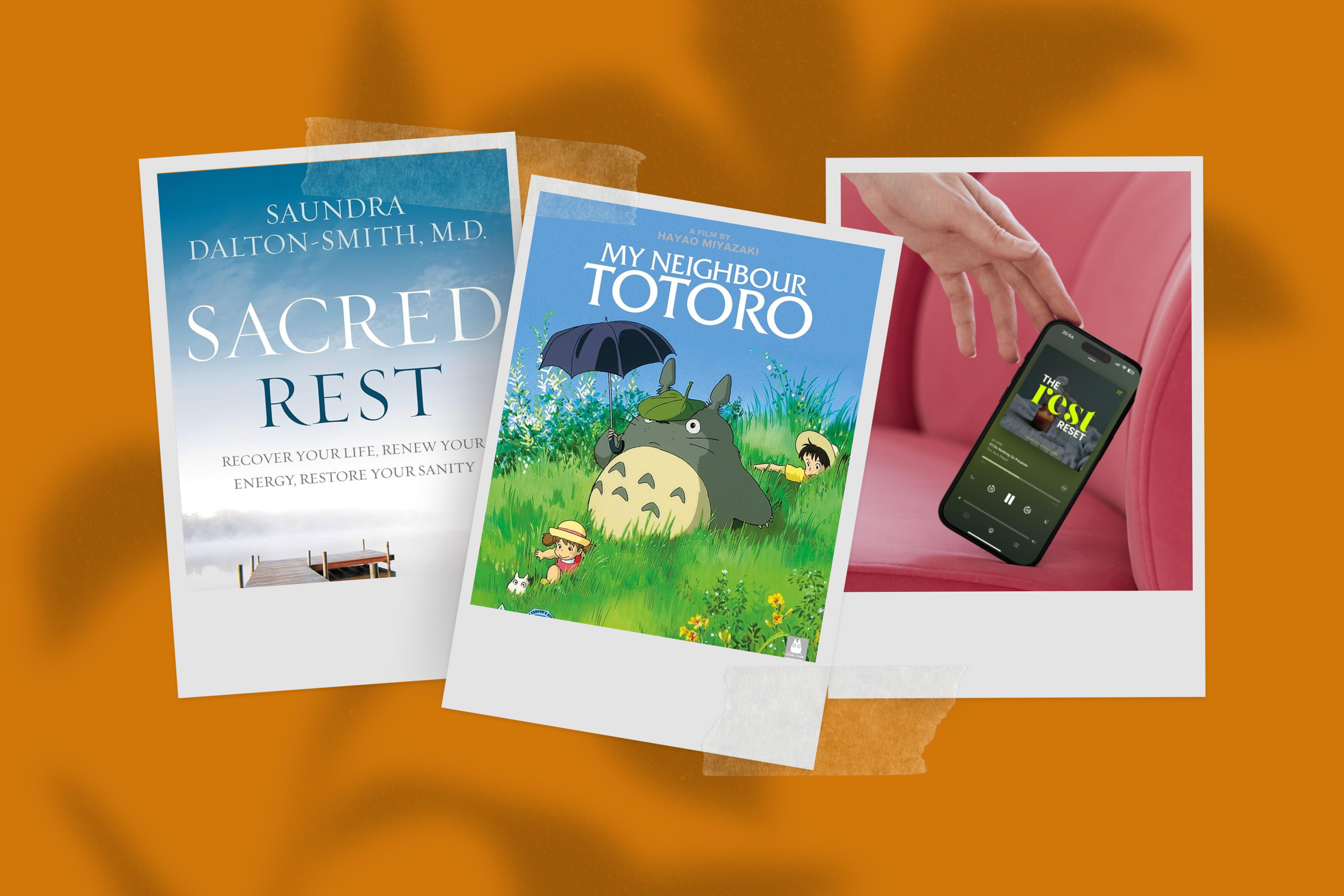
📖 Read: Sacred Rest by Dr. Saundra Dalton-Smith
The book that started it all for me. Dalton-Smith’s framework of the seven types of rest is practical, eye-opening, and deeply validating. If you’ve ever felt tired even after a good night’s sleep, this will help you understand why and what to do about it.
📺 Watch: My Neighbour Totoro (Studio Ghibli)
As a lifelong Studio Ghibli fan, this one holds a special place in my heart. It’s a gentle, slow-moving masterpiece that shows rest not as escape, but as presence. Two young sisters move to the countryside and encounter wonder, grief, and healing, all in the quiet company of nature and the mysterious forest spirit Totoro.
If you’ve been craving emotional or sensory rest, this is the kind of film that helps your nervous system exhale.
🎧 Listen: The Rest Reset – A 3-day audio taster
This is my own take on rest, drawn from personal experience and evidence-based practices. Each short episode offers a soulful prompt to help you slow down, step back, and return to yourself. There’s a full 30-day version but you can find a free 3-day taster on Spotify or Apple Podcasts now, no sign-up needed.
Before you go…
We spend so much time proving we’re capable, strong, reliable and productive. But what if real strength also looks like knowing when to stop? What if reliability includes rest? What if productivity isn’t the prize…but the problem?
You don’t have to wait until you’re burnt out to take a break and you don’t have to reach breaking point to let yourself breathe.
Start now. Start small. Start by listening to yourself.
Until next time,
Dulcie x
Be gentle with yourself.
Work smart, rest well, play more.
You don’t have to earn your rest, you just have to honour your needs.